A records discipline before a hygiene one.
Any kitchen can look clean on the day of a visit. What distinguishes a controlled operation is whether it can produce a complete, contemporaneous record for a batch cooked eight months ago, and whether that record shows the control limits were held.
- HACCP on every line
- FoSTaC-certified teams
- Records produced on demand
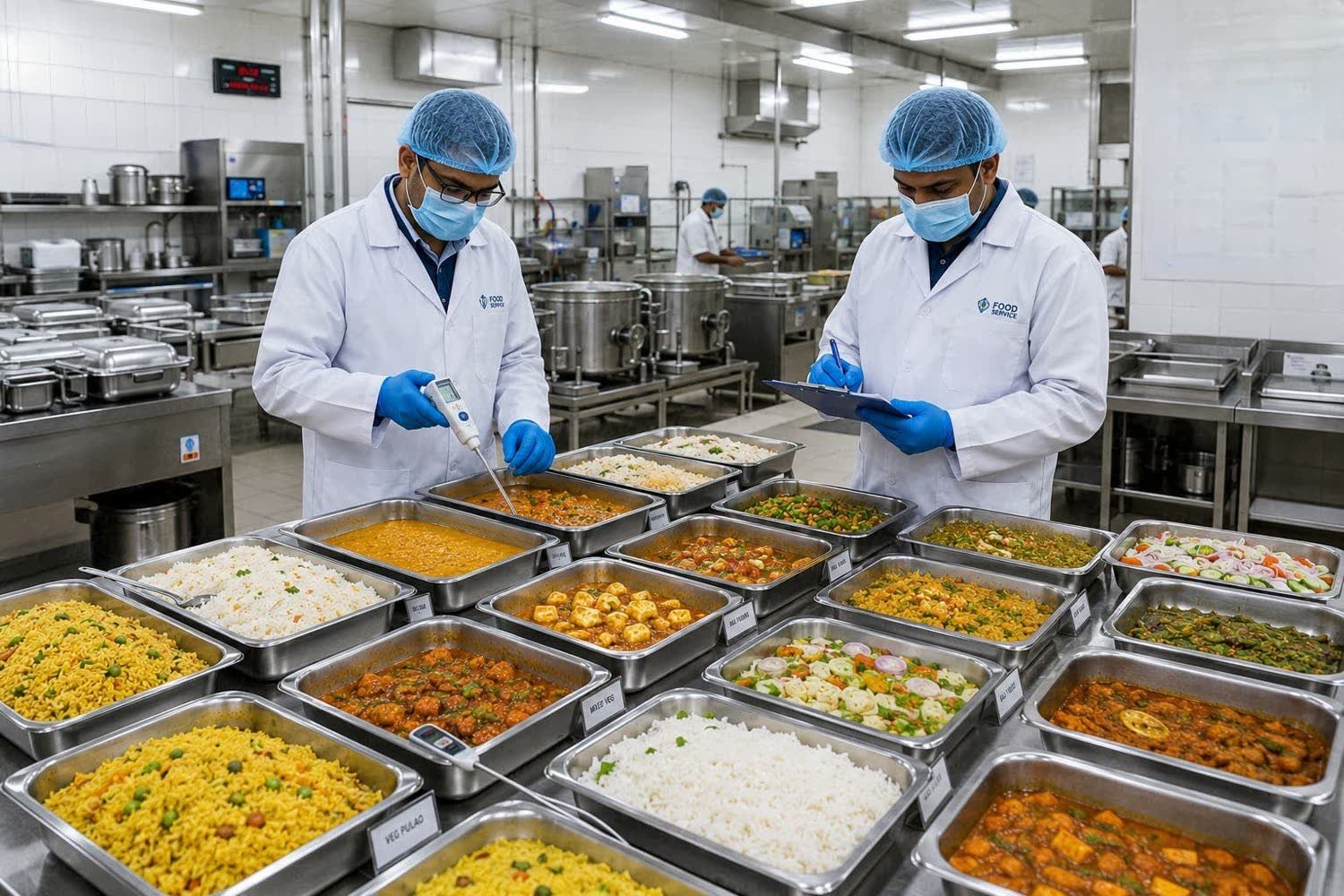
The credentials, and what each one covers.
Certificate numbers, issuing bodies and validity dates are provided in full with every tender submission and on request during evaluation.
Seven principles, every production line.
Hazard analysis is not a document that sits in a file. It determines where thermometers are placed, which readings are recorded, what happens when a limit is breached and who is authorised to release a batch.
- Hazard analysis, biological, chemical and physical hazards identified per process step.
- Critical control points, determined at cooking, chilling, hot holding and reheating.
- Critical limits, validated time and temperature thresholds set for each CCP.
- Monitoring, readings taken and recorded at defined frequency by trained personnel.
- Corrective action, pre-defined response when a limit is breached, including batch disposition.
- Verification, internal audit, laboratory testing and management review of the system.
- Documentation, records retained for the prescribed period and produced on demand.
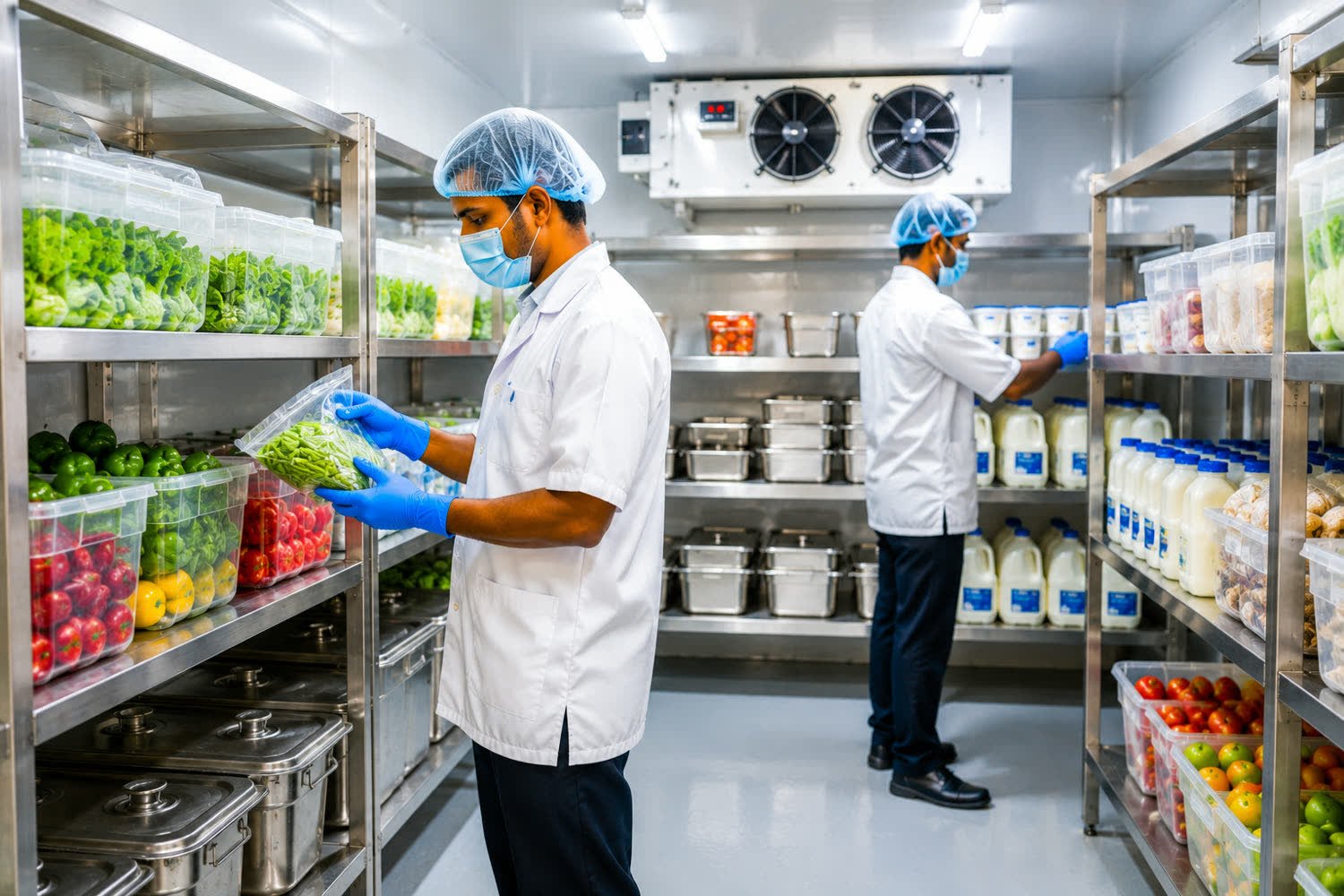
Eight standing controls, running continuously.
These are prerequisite programmes, they operate whether or not a specific hazard has been flagged, and their records form the baseline any auditor examines first.
The thresholds we hold, and what happens when we do not.
| Control point | Critical limit | Monitoring | Corrective action |
|---|---|---|---|
| Goods inward, chilled | ≤ 5 °C on receipt | Probe every consignment | Consignment rejected and supplier notified |
| Goods inward, frozen | ≤ −18 °C on receipt | Probe every consignment | Consignment rejected and supplier notified |
| Cooking | ≥ 75 °C core, held | Probe per batch, logged | Continue cooking; re-probe; batch held pending release |
| Blast chilling | 70 °C → 4 °C within 90 minutes | Chiller data log per cycle | Batch quarantined and dispositioned by quality |
| Chilled storage | 0–5 °C continuous | Continuous logging, alarmed | Excursion investigated; stock assessed and dispositioned |
| Hot holding | ≥ 65 °C throughout | Probe at defined intervals | Reheat to ≥ 75 °C once, or discard |
| Reheating | ≥ 75 °C core, single reheat | Probe per batch | Batch discarded if limit not achieved |
| Service temperature | ≥ 65 °C hot / ≤ 5 °C chilled | Probe per counter, logged | Item withdrawn from service and replaced |
Limits shown are the standard applied across the network. Where a client, regulator or contract specifies a stricter threshold, the stricter value governs.
Traceability
Every finished batch carries a code that resolves backwards to supplier lot numbers and forwards to the service points it reached. One query identifies both the source and the exposure.
- Supplier lot captured at goods inward
- Batch code assigned at production
- Despatch manifest links batch to destination
- Retention sample held against every batch
Incident & recall
A tested recall procedure with a defined escalation matrix, nominated responsible persons and contracted notification timelines to the client and the regulator.
- Immediate withdrawal from service on suspicion
- Client and authority notified within contracted window
- Retention sample and records released to investigators
- Root cause analysis and documented corrective action
Competence, not a signature on an induction sheet.
Food safety failures are overwhelmingly behavioural. Our training programme is competence-based and periodically re-assessed, not a one-time induction signature.
- FoSTaC-certified food safety supervisors at every operating facility.
- Induction, role-specific and refresher training with recorded competence assessment.
- Annual medical fitness certification for all food handlers.
- Daily fitness-to-work declaration before entry to production zones.
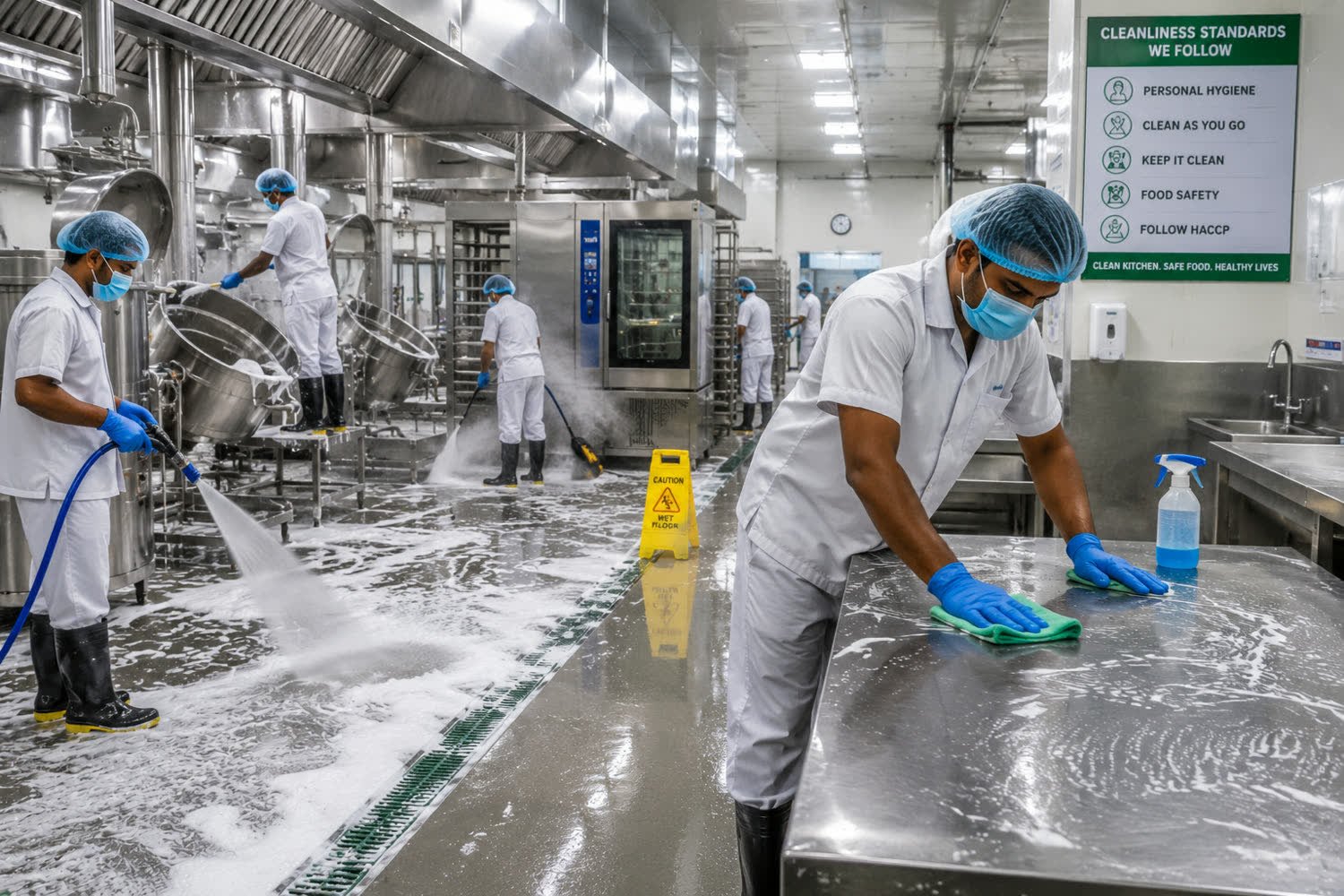
Ask for the audit file before you ask for the menu.
Licences, audit reports, laboratory certificates and the quality manual are released for evaluation on request.