Most food safety failures are procurement failures.
By the time a problem reaches the kitchen it is usually too late and too expensive to fix. We push control upstream, to supplier qualification, farm-gate sourcing and inbound acceptance, because that is where the risk is actually created.
- Audited suppliers only
- Farm-gate and FPO sourcing
- Dual-point temperature logs
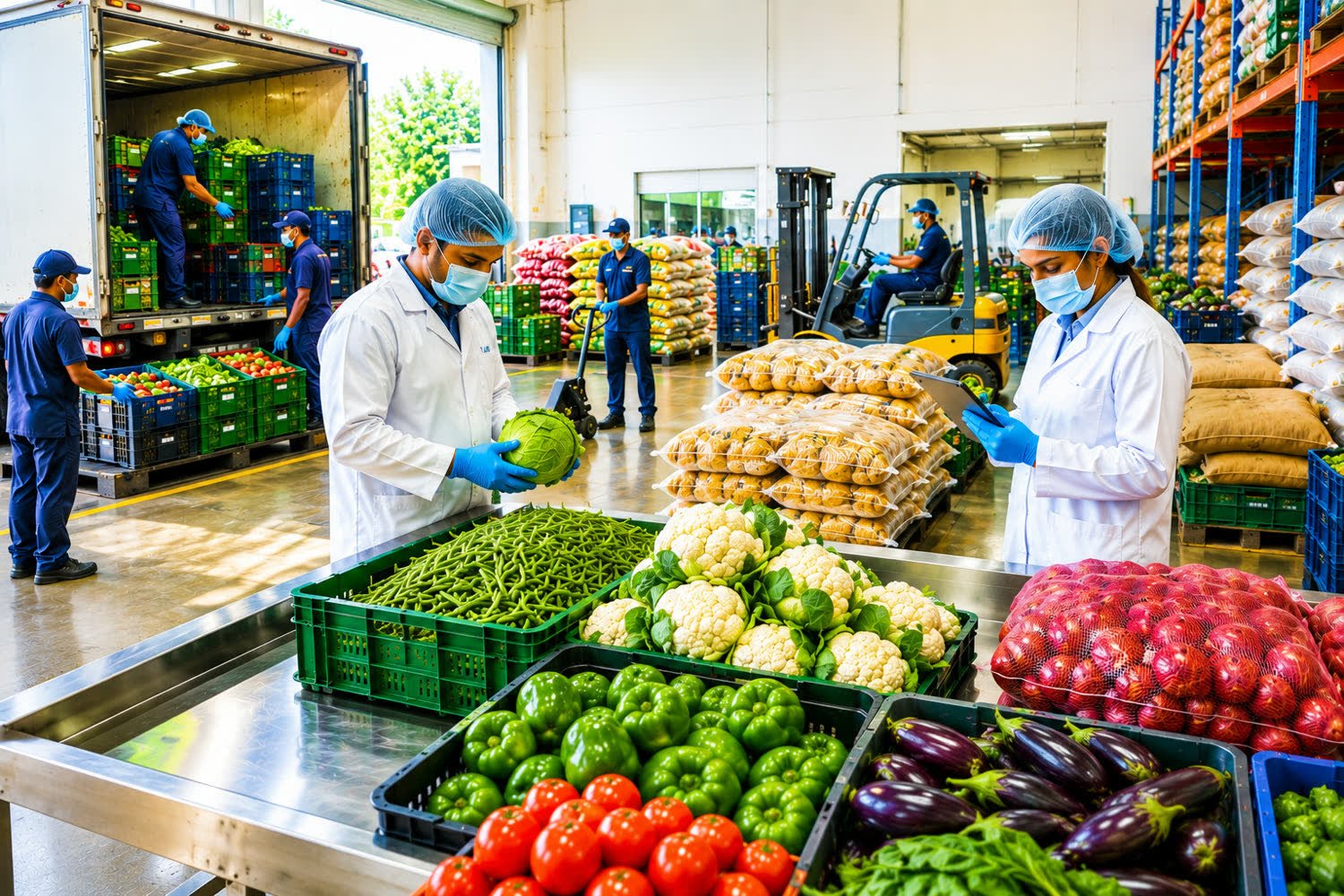
Six controlled handovers between the farm and the plate.
Each handover has an acceptance standard, a responsible role and a record. Nothing moves forward on assumption.
Source qualification
Suppliers, farmer producer organisations and aggregators are audited against documented criteria covering licensing, hygiene, capacity and traceability before a single order is placed.
Farm-gate & FPO procurement
Staples and fresh produce sourced directly where practical, shortening the chain, improving traceability and returning more of the contract value to primary producers.
Inbound acceptance
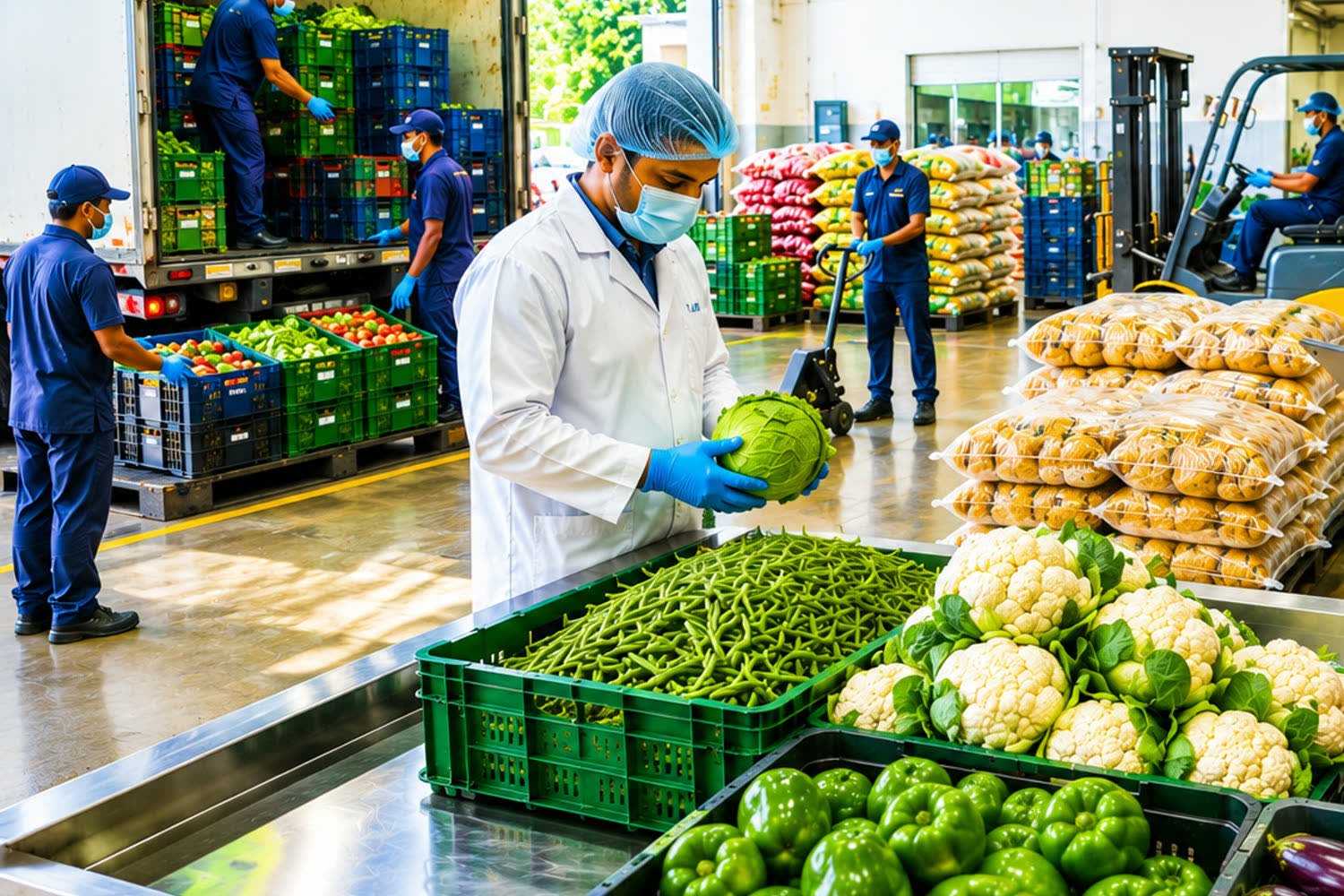
Every consignment inspected against defined criteria, temperature, packaging integrity, residual shelf life, documentation and organoleptic quality. Non-conforming stock is rejected, not downgraded.
Storage & rotation
Temperature-mapped chambers with continuous logging, segregated storage by risk category, and enforced first-in-first-out rotation with periodic stock reconciliation.
Issue to production
Materials issued against the day's indent with lot numbers captured, establishing the link between supplier lot and finished batch code.
Distribution & last mile
Temperature-controlled despatch on planned routes, with time-and-temperature recorded at despatch and again at receipt by the client's nominated representative.
Shorter chains are safer and fairer.
Every intermediary adds a handling step, a temperature risk and a break in traceability. Direct procurement from farmer producer organisations and women's self-help groups reduces all three, and keeps a larger share of public expenditure in the local economy where the contract is being delivered.
- Direct farm-gate agreements on staples and seasonal produce where volume supports it.
- Engagement with women's self-help groups for preparation and ancillary supply.
- Fortified staples used where a nutrition programme specification requires it.
- Dual-source strategy on critical commodities to protect service continuity.
What a consignment must satisfy to enter a kitchen.
| Category | Acceptance standard | Documentation required |
|---|---|---|
| Cereals & pulses | Within specification for moisture, foreign matter and infestation | Supplier lot, mill certificate where applicable |
| Edible oils | Sealed, branded, within shelf life, packaging intact | Batch number, FSSAI licence of manufacturer |
| Fresh vegetables | Sound condition, free of visible spoilage, within agreed grade | Source declaration, lot reference |
| Dairy | Received at ≤ 5 °C, packaging intact, residual shelf life within limit | Batch number, temperature record |
| Meat & poultry | Received at ≤ 5 °C chilled or ≤ −18 °C frozen, from approved source only | Veterinary or source certificate, cold-chain log |
| Spices & condiments | Sealed, branded, within shelf life, no caking or off-odour | Batch number, manufacturer licence |
| Packaged & fortified items | Labelling compliant, fortification declared where specified | Batch number, analysis certificate where required |
| Water & ice | Potable, from approved treated source | Periodic laboratory test certificate |
The last mile is where cold chains break.
Route design, vehicle specification and dual-point temperature recording are what keep product inside its limits between a controlled kitchen and an uncontrolled service point.
Fleet
Insulated hot-box and refrigerated vehicles maintained to a scheduled sanitation and calibration programme.
Route design
Routes planned around service windows and transit duration, with defined maximum time from despatch to service.
Tracking
GPS tracking on every despatch, with deviation alerts to the operations desk and the client on request.
Handover
Temperature recorded and countersigned at receipt, closing the custody chain with the client's representative.
Supplying into an ANIBA kitchen?
Producers, FPOs and distributors seeking qualification can request the vendor onboarding pack and audit criteria.