Formed to close a gap the group kept encountering.
ANIBA GROUP delivers engineering and infrastructure across nine states. On project after project, the same operational weakness surfaced at site level: workforce feeding was improvised, undocumented and the first thing to break when headcount moved.
- Five phases of growth
- From one site kitchen to a network
- Public procurement since phase four
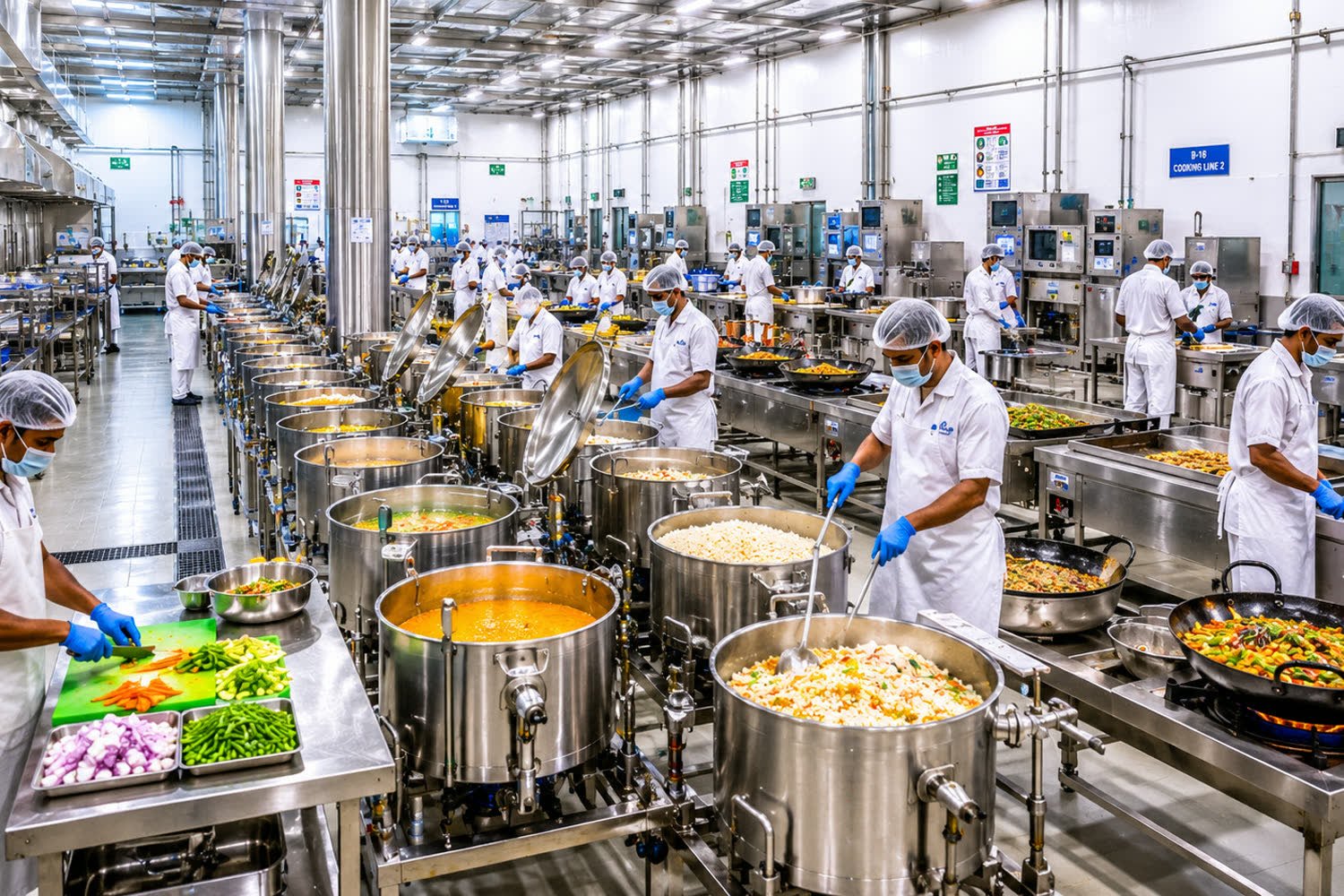
A logistics system with a nutrition specification.
ANIBA Food Services was established to remove that weakness, first inside the group's own projects, and then as a standalone operating company serving external institutional and public-sector clients. The principle has not changed since.
What changed is scale. Each phase below added capability that the previous one proved was necessary: consolidation, then certification, then documentation heavy enough to survive public procurement.
Internal site messing
Workforce feeding standardised across ANIBA GROUP project sites, replacing ad-hoc arrangements with documented SOPs and a single accountable operator.
First central kitchen
Production consolidated into a purpose-built HACCP-controlled facility, proving the cook-chill and cold-chain model at institutional volume.
External institutional contracts
Capability extended to hospitals, campuses and industrial clients outside the group, with a formal quality management system and compliance dossier.
Public sector & tender operations
Statutory registrations, past-performance records and financial documentation assembled for competitive public procurement across multiple states.
Multi-state kitchen network
A distributed network of central kitchens with regional hubs, a mobile kitchen reserve and a digital operations layer reporting against contracted service levels.
Where the next phase goes.
We establish a new production base where contract scale and duration justify the infrastructure. Tell us the location and volume and we will confirm feasibility.